0
0
0
0
0
0
rpm
Torque & Velocity
Supercar
Supercars

McLaren W1 Shatters Nürburgring Record with 1,258HP Hybrid Powertrain

Reviews

Ferrari Amalfi Spider
First Drive

Ferrari Amalfi Spider: A Front-Engine V12 That Redefines Open-Top Grand Touring

By Marco Bellini · August 9, 2026 · 8 min read
The road climbs through the Dolomites like a ribbon of asphalt stitched into limestone. At 6,000 feet, the air is thin enough that the Amalfi Spider's 830-horsepower V12 breathes differently—sharper, more urgent. Ferrari insists this is a grand tourer, not a sports car. The distinction feels academic when you're covering ground at a rate that makes the alpine villages blur into watercolor smudges.

The retractable hardtop operates in 14 seconds, even at speeds up to 30 mph, and when it's stowed, the V12's intake howl fills the cabin unfiltered. It's the kind of noise that makes you forget turbochargers ever existed. This engine—a 6.5-liter naturally aspirated unit derived from the 812 Competizione—redlines at 9,500 rpm. Ferrari claims it's the last of its kind: no hybrid assist, no electric motors, just twelve cylinders and atmospheric pressure.

Maranello's chassis engineers have performed something close to magic with the weight. At 1,790 kilograms, the Amalfi isn't light, but the rear-wheel steering and magnetorheological dampers conspire to shrink it around you. The steering is quick without being nervous—2.3 turns lock-to-lock—and the carbon-ceramic brakes deliver progressive bite that never feels over-assisted. Where the old 812 could feel front-heavy under trail braking, the Amalfi rotates with the kind of balance you'd expect from a mid-engine car. The secret is the rear-mounted transaxle and a 47/53 front-to-rear weight distribution that Ferrari spent two years fine-tuning.
Ferrari on mountain road
BMW M5 Touring
Long-Term

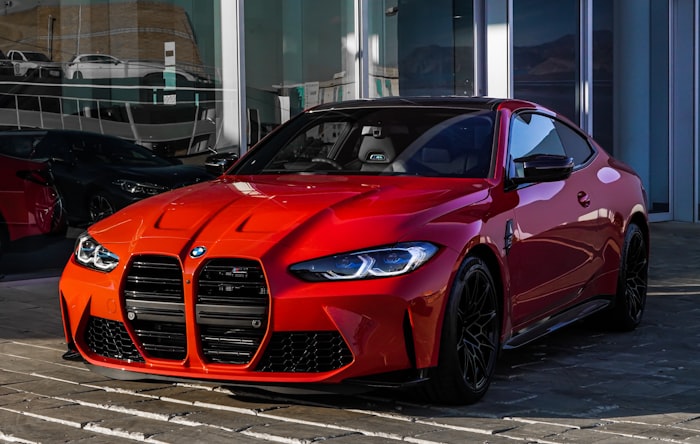
2027 BMW M5 Touring After 15,000 Miles: The 717HP Wagon America Finally Gets

By Dr. James Wong · August 7, 2026 · 7 min read
Fifteen thousand miles is enough distance to cross the United States five times. It's enough to discover every rattles, every software glitch, every ergonomic compromise that a press launch carefully routes around. The M5 Touring accumulated those miles across three seasons—from Michigan winter salt to Arizona summer heat to Colorado fall gravel—and the verdict is more nuanced than the spec sheet suggests.

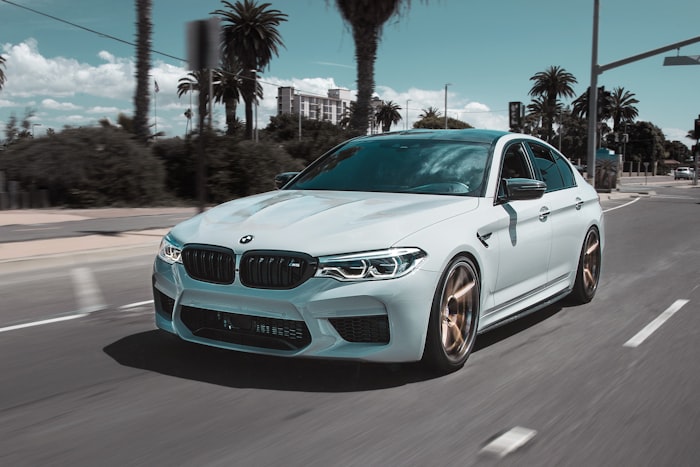
The powertrain remains the star. BMW's S68 4.4-liter twin-turbo V8, paired with a 194-horsepower electric motor integrated into the eight-speed automatic, delivers 717 horsepower with the kind of immediacy that makes the 5,115-pound curb weight feel like a typographical error. Zero to sixty in 3.4 seconds in a station wagon is objectively absurd. What's more impressive is how the hybrid system manages the transition between electric-only crawling and full-attack V8 fury—there's no perceptible handoff, just a seamless swelling of acceleration.

The suspension tells a more complicated story. In Comfort mode, the adaptive dampers do an admirable job of absorbing Michigan's potholed highways, but switch to Sport Plus and the ride becomes brittle in a way that feels more harsh than sporty. The sweet spot is Sport Individual with dampers set to mid-stiffness and the engine and transmission dialed to maximum attack—a combination BMW doesn't offer as a preset but that every owner will discover. After 15,000 miles, the Pirelli P Zero tires were down to the wear bars, and the brake pads—enormous six-piston front calipers—showed significant wear from enthusiastic canyon driving. Running costs are supercar territory: we averaged 18 mpg combined and spent $2,800 on tires alone.
BMW interior detail

Supercars

Rimac Nevera R
Track Test

Rimac Nevera R Sets 23 Performance Records in a Single Day at Germany's ATP Papenburg

By Nina Petrova · August 6, 2026 · 6 min read
The numbers strain credulity. Twenty-three certified performance records set in a single day on a German test track. Zero to 60 mph in 1.74 seconds. Zero to 124 mph in 4.2 seconds. Quarter-mile in 8.25 seconds at 181 mph. These are not typos; they are the verified results from a production Rimac Nevera R equipped with standard Pirelli Trofeo RS tires and a full interior.

Mate Rimac, the company's 38-year-old founder, watched the timing screens from a tent at the edge of the 4.8-kilometer oval at Automotive Testing Papenburg. "We designed the R to be 12 percent faster than the standard Nevera," he said between record attempts. "The data suggests we've exceeded that significantly." The key changes from the standard car: a 108-kilogram weight reduction achieved through carbon-fiber body panels and thinner glass, a 210-horsepower increase to 2,107 horsepower, and a new torque-vectoring algorithm that Rimac's software team rewrote from scratch over eighteen months.

The most revealing record isn't the headline zero-to-sixty sprint—though that number will dominate social media for weeks. It's the 62-to-124 mph passing time of 2.5 seconds, which closely mirrors real-world autobahn scenarios. The Nevera R achieves this not through brute power alone but through a sophisticated four-motor torque distribution system that adjusts output 100 times per second. During our passenger-ride demonstration, the lateral grip at 1.6 g through Papenburg's banked curves felt less like driving and more like being pressed into a centrifuge. Your brain takes a moment to recalibrate its understanding of what a road-legal vehicle can do.
Track test action
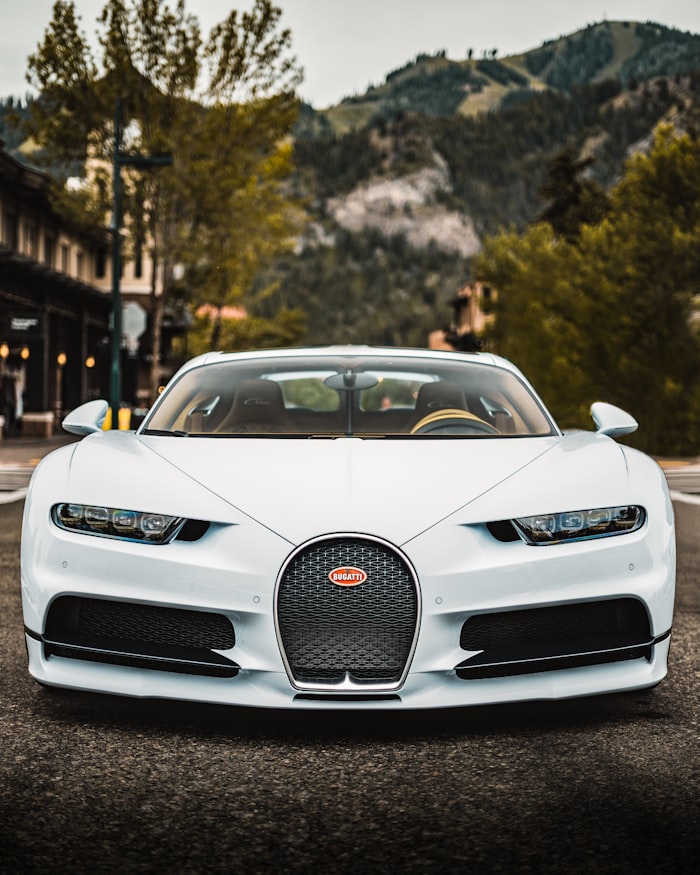
Bugatti Tourbillon
First Look

Bugatti Tourbillon Customer Deliveries Begin at $4.6 Million with Three-Year Wait

By Kevin Zhou · August 4, 2026 · 5 min read
The first customer Bugatti Tourbillons are leaving Molsheim this month, and despite the $4.6 million base price—which climbs past $5.5 million with typical options—the order book extends into 2029. Only 250 will be built, and 187 are already spoken for. The waiting list reads like a Forbes rich list: three sovereign wealth fund directors, two tech founders who IPO'd in 2024, and a European industrialist who already owns four Veyrons and three Chirons.

The Tourbillon represents Bugatti's definitive pivot. After two decades of quad-turbocharged W16 engines, the third-generation hypercar adopts a naturally aspirated 8.3-liter V16 developed with Cosworth, paired with three electric motors for a combined 1,800 horsepower. The V16 revs to 9,000 rpm—an engineering statement as much as a performance one—and produces a sound that Bugatti's acoustic engineers spent three years tuning. Early customers who attended private listening sessions in Molsheim describe it as "organic for the first time in Bugatti history."

The interior continues the watchmaking metaphor that gave the car its name. The instrument cluster—a titanium and sapphire crystal assembly built by Swiss watchmaker Concepto—took eighteen months to develop and can be serviced independently of the car. "We want owners to pass this down as an heirloom," says design director Frank Heyl. "The Tourbillon is the first Bugatti where the craftsmanship inside matches the engineering underneath." The first US deliveries will arrive at the Quail during Monterey Car Week, where three customers will take simultaneous delivery in a private ceremony.
Bugatti detail

Electric

Mercedes Electric SUV
Breaking

Mercedes-AMG Teases 1,000HP Electric Hyper-SUV with Solid-State Battery Technology

By David Kim · August 10, 2026 · 6 min read
Affalterbach has never built a standalone AMG vehicle from the ground up. Every AMG in history started as a Mercedes-Benz that engineers then took apart and rebuilt. The electric hyper-SUV teased this week—codenamed "Project Titan"—breaks that sixty-year tradition. It rides on a bespoke AMG.EA platform that shares nothing with any existing Mercedes architecture, and it will be the first production vehicle to use solid-state batteries from Massachusetts-based Factorial Energy.

The implications of solid-state technology extend far beyond the headline 1,000-horsepower figure. Factorial's cells use a lithium-metal anode and a sulfide-based solid electrolyte, which eliminates the flammable liquid electrolyte that makes conventional lithium-ion batteries a fire risk. More importantly, the energy density—450 watt-hours per kilogram, nearly double the best current cells—means AMG can package a 118-kilowatt-hour battery in a package 40 percent smaller and 33 percent lighter than the EQS SUV's pack. The result is a vehicle that AMG claims will weigh under 2,500 kilograms while delivering a 500-mile WLTP range.

AMG CEO Michael Schiebe told journalists at a closed-door briefing in Stuttgart that the Titan represents "the most significant technical investment in AMG history." The development budget exceeds €2 billion, and the vehicle will be built on a dedicated production line at the Sindelfingen plant starting in late 2027. Three electric motors—one front, two rear—provide true torque vectoring without the brake-based systems that lesser EVs use. The target Nürburgring lap time, Schiebe revealed almost casually, is under 7 minutes and 30 seconds. That would make it faster than the current Porsche Cayenne Turbo GT.
Battery technology
EV charging
Analysis

Indonesia's Nickel Boom Reshapes Global EV Battery Supply Chain Away from China

By Patricia Owens · August 8, 2026 · 7 min read
The island of Sulawesi wasn't on anyone's automotive map five years ago. Today, it's the single most important piece of real estate in the global electric vehicle supply chain. Indonesia processed 1.6 million metric tons of nickel in 2025—more than the next four countries combined—and the $30 billion invested in high-pressure acid leaching plants along the Morowali and Weda Bay industrial parks has fundamentally altered the economics of every EV battery produced outside China.

The numbers tell a stark story. Before Indonesia's processing boom, China controlled 68 percent of the world's nickel refining capacity. By the end of 2026, that figure will drop below 50 percent for the first time in a decade. The shift matters because nickel is the single most expensive material in a nickel-manganese-cobalt cathode, accounting for roughly 40 percent of the cell's raw material cost. Indonesian nickel—processed using Chinese-funded but Indonesian-operated facilities—costs approximately 18 percent less than Chinese-refined equivalent, enough to shave $1,200 off the bill of materials for a typical 75-kilowatt-hour pack.

The environmental calculus is more complicated. High-pressure acid leaching generates toxic tailings that must be managed for decades, and several Sulawesi communities have filed legal challenges against the mining companies for contamination of coastal fisheries. Indonesia's government has responded with a moratorium on new processing licenses until an environmental review is completed, but existing facilities continue to operate at full capacity. The battery industry's dirty secret is that the green transition runs on nickel that is anything but green to extract. Automakers are responding with supply chain audits, but the tension between cost reduction and environmental responsibility will define the next chapter of EV adoption.
Factory

Motorsport

Formula 1 racing
F1

FIA Introduces Radical 2027 Aerodynamic Rules to Improve Overtaking in Formula 1

By Emma Williams · August 5, 2026 · 8 min read
The FIA's technical working group has finalized the most significant aerodynamic regulation changes since the ground-effect era began in 2022. The 2027 rules, published Wednesday evening after eighteen months of CFD simulations and wind-tunnel testing with all ten teams, introduce active front and rear wings, eliminate the complex bargeboard and floor-edge geometries that dominated the current era, and mandate a standardized rear diffuser geometry to prevent the kind of aerodynamic loopholes that gave Red Bull its 2023-2024 dominance.

The core philosophy is straightforward: reduce the wake turbulence that makes following another car nearly impossible within one second at high-speed corners. Current cars lose approximately 35 percent of their downforce when running one car length behind a competitor. The FIA's simulations suggest the 2027 cars will lose only 12 percent in the same scenario—a transformation that could make DRS zones redundant within two seasons.

Team reactions split along predictable lines. Adrian Newey, who recently joined Aston Martin after departing Red Bull, called the rule changes "the most aerodynamically restrictive framework in F1 history" in a leaked internal memo. Ferrari technical director Loïc Serra told journalists at Maranello that the active aero systems represent "an opportunity for differentiation through control software rather than geometry." The software dimension is critical: teams will program their own active wing deployment strategies within FIA-mandated parameters, creating a new frontier of competition that blends mechanical engineering with real-time control algorithms. The first cars will break cover at pre-season testing in Bahrain in February 2027.
F1 technical
WEC racing
WEC

How Hybrid Technology from the 24 Hours of Le Mans Is Transforming Road Cars

By Michael Torres · August 3, 2026 · 9 min read
The 2026 24 Hours of Le Mans wasn't won by the fastest car. It was won by the car that managed its hybrid energy deployment most efficiently across 5,200 kilometers of racing. Ferrari's 499P Hypercar, running a bespoke 3.0-liter twin-turbo V6 with a front-axle energy recovery system, completed 397 laps with an average fuel consumption of 22.7 liters per 100 kilometers—a number that would impress in a road-going sedan, let alone a race car producing 680 horsepower.

The technology transfer from Le Mans to Ferrari's road car division has accelerated dramatically since the 499P program began in 2023. The Amalfi Spider's front-axle energy recovery system, branded Sistema Ibrido, is a direct descendent of the 499P's hybrid unit. The electric motor sandwiched between the engine and the dual-clutch gearbox harvests kinetic energy under braking and deploys it during corner exit through the front axle alone—a configuration that Ferrari's road-car engineers adapted from the 499P's more aggressive track-only setup.

The FIA and ACO, the organizers of Le Mans, have deliberately structured the Hypercar regulations to encourage road-relevant technology transfer. The requirement that hybrid systems be available for at least 20 hours of continuous operation—a full Le Mans race distance plus margins—has pushed battery thermal management to levels that directly benefit production EVs. Toyota's GR010 Hybrid, which uses a 900-volt electrical architecture and silicon-carbide power electronics, has influenced the development of the company's next-generation EV platform due in 2028. The irony is that the world's most prestigious gasoline-powered race has become the most effective laboratory for electric vehicle development.
Le Mans pit lane

Industry

Engine manufacturing
Analysis

The Combustion Engine Isn't Dying — It's Being Reborn as the Ultimate Hybrid Partner

By Dr. Rebecca Kumar · July 28, 2026 · 9 min read
The obituary for the internal combustion engine has been written so many times that it has become a genre unto itself. But the data from the world's largest automotive suppliers tells a different story. Bosch, Continental, and BorgWarner collectively invested $14 billion in combustion engine research and development in 2025 alone—not to preserve the status quo, but to transform the ICE into a dedicated generator optimized for a narrow, efficient operating range within hybrid systems.

Toyota's new Atkinson-cycle 2.0-liter four-cylinder, which begins production at the Kamigo plant in January 2027, achieves 45.3 percent thermal efficiency—a figure so close to the theoretical maximum for a spark-ignition engine that it represents a generational milestone. The engine achieves this by running almost exclusively at 2,400 rpm and 60 percent load, operating as a range extender for a 42-kilowatt-hour battery pack. In this role, it never drives the wheels directly; it simply generates electricity at peak efficiency for hours at a time. Toyota claims the system, which will debut in the next-generation Prius, will deliver 85 miles per gallon in real-world driving conditions.

The strategic logic is compelling. Manufacturing a hybrid powertrain costs approximately $2,800 more than a pure-ICE equivalent, while a full battery-electric system costs $8,500 more. For markets where charging infrastructure is sparse and electricity prices are high—India, Brazil, much of Southeast Asia—the hybrid represents the only viable path to meaningful emissions reduction this decade. The combustion engine's future is as an electric generator first and a traction motor second, and that future is both more interesting and more imminent than the simple narrative of its demise suggests.
Engine detail
Car interior
Opinion

Why Toyota's Hybrid-First Strategy Is Proving More Profitable Than Tesla's Electric-Only Approach

By Marcus Webb · July 25, 2026 · 7 min read
In the second quarter of 2026, Toyota posted an operating margin of 12.1 percent on revenue of $78 billion. Tesla, in the same period, reported 8.3 percent on $27 billion. The gap isn't just about scale or market maturity—it's about strategic philosophy. Toyota sells 3.5 million hybrids annually across 190 countries. Tesla sells 2.1 million EVs across roughly 40 markets where charging infrastructure supports them. The hybrid, it turns out, is not a transitional technology being phased out by the irresistible march of electrification. It is a profit engine that funds electrification while generating the kind of margins that pure EV manufacturers can only aspire to.

The unit economics reveal why. A Toyota RAV4 Hybrid costs approximately $1,800 more to produce than its gasoline equivalent and sells for $3,200 more—a net margin gain of $1,400 per vehicle. Multiply that by 3.5 million annual sales and you have $4.9 billion in additional gross profit that requires no new factory, no new supply chain, and no consumer behavior change. Tesla's approach—building dedicated EV platforms, battery factories, and charging networks simultaneously—has required $48 billion in cumulative capital expenditure since 2020, with profitability arriving only in 2023 and remaining fragile.

This isn't an argument against electrification. It's an observation that the transition will be slower, messier, and more geographically uneven than the tech industry's narrative allows. Toyota's approach—hybrids now, BEVs where infrastructure exists, hydrogen where it doesn't—looks not like foot-dragging but like the kind of multi-pathway strategy that an industry with 90 million annual units and century-deep capital commitments actually requires. The market, for now, agrees: Toyota's market capitalization surpassed Tesla's in May 2026 for the first time since 2019.
Toyota plant

Classics

Classic Porsche
Auction

Restored 1967 Porsche 911S Sells for $475,000 at Monterey as Air-Cooled Market Defies Gravity

By Sarah Whitman · July 30, 2026 · 6 min read
The hammer fell at $475,000—nearly double the pre-sale estimate—and the crowd at RM Sotheby's Monterey auction erupted. Lot 247, a Bahama Yellow 1967 Porsche 911S restored over four years by marque specialist Road Scholars in North Carolina, had just set a new benchmark for short-wheelbase 911s. The buyer, a Silicon Valley venture capitalist bidding by phone, added the car to a collection that already includes a 1973 Carrera RS and a 959 Sport.

The air-cooled Porsche market has been on a tear that even the most optimistic collectors didn't predict. Values for early 911s have appreciated 23 percent year-over-year since 2023, driven by a demographic shift that's reshaping the entire collector car ecosystem. Generation X, now squarely in peak earning years, grew up worshipping the 911s of the 1970s and 1980s—cars their parents couldn't afford but that posters on bedroom walls made immortal. Now those same enthusiasts have the means, and they're buying with a fervor that makes the baby boomer muscle-car boom of the 2010s look restrained.

The supply side makes the price appreciation sustainable. Porsche built approximately 1,800 examples of the 1967 911S, and fewer than 300 are known to survive in numbers-matching condition. Each restoration consumes 18 to 24 months and costs between $200,000 and $350,000, creating a floor price that ensures values won't collapse even if demand softens. "The market isn't being driven by speculators," says RM Sotheby's specialist Gord Duff. "It's being driven by Gen X buyers who want one perfect car to keep for twenty years. They're not flipping—they're building collections."
Porsche detail
Goodwood Revival
Event

Goodwood Revival 2026 Celebrates 80 Years of Post-War Motorsport with Record Grid of 1960s F1 Cars

By Ibrahim Diallo · July 22, 2026 · 5 min read
Twenty-seven 1.5-liter Formula 1 cars from the 1961-1965 era lined up on the Goodwood grid Saturday afternoon, the largest gathering of the breed since the 1965 German Grand Prix at the Nürburgring. The sight of sixteen Coventry Climax engines and eleven BRM V8s firing simultaneously—each producing roughly 210 horsepower from engines the size of a modern microwave oven—drew a standing ovation from the 150,000 spectators before a single wheel had turned.

The 2026 Revival was dedicated to the 80th anniversary of the first post-war race meeting at Goodwood in 1946, when the Duke of Richmond's grandfather carved a circuit out of a former RAF airfield using hay bales as barriers. The contrast with today's meticulously restored venue—period-correct signage, attendants in 1960s dress, vehicles from an era when danger was accepted as a condition of the sport—is part of the event's enduring appeal. The Revival isn't nostalgia as escape; it's nostalgia as preservation, a living museum where the cars are exercised rather than entombed.

The racing was genuinely competitive. Jenson Button, in a 1962 BRM P578, traded the lead with nine-time Le Mans winner Tom Kristensen in a 1963 Lotus 25 for eleven laps before Button's BRM succumbed to a fractured oil line on the penultimate lap. The crowd's roar when Kristensen took the checkered flag was audible from the cricket pitch half a mile away. "There's nowhere else in the world you can see 1.5-liter F1 cars driven in anger by world champions," Kristensen said afterward, still wearing his period-correct open-face helmet. "The cars are worth more than most houses I've owned, and the owners let us race them. That's what makes Goodwood special."
Vintage racing

Stay in the Fast Lane

The week's most important automotive stories, reviews, and industry analysis. Delivered every Sunday morning.